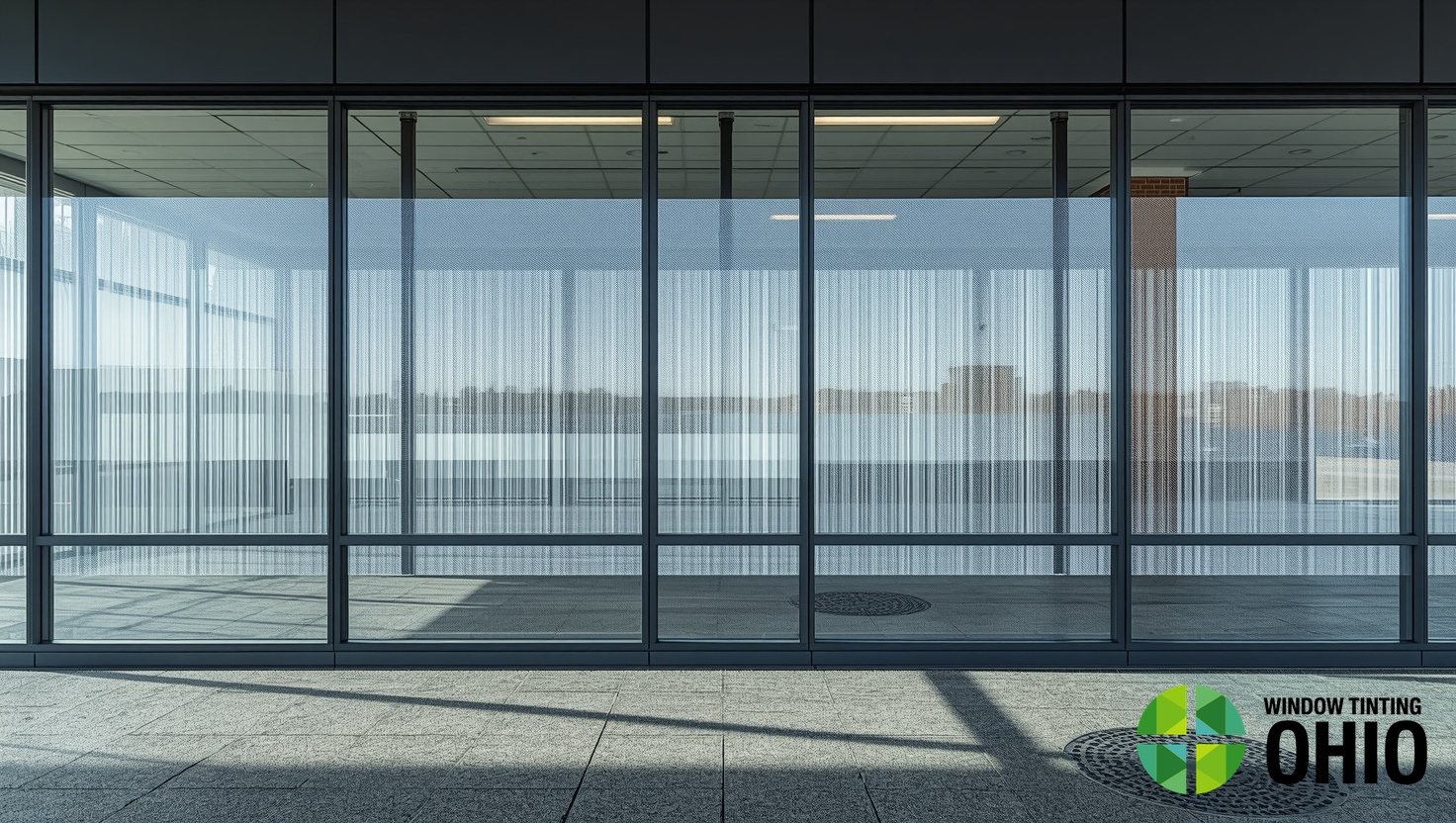
From Lake Erie’s shoreline to glass-heavy offices in Columbus, Cincinnati, and Cleveland, reflective and see-through windows can become a serious bird-collision hazard. For many properties, bird strike prevention window film in Ohio is a practical retrofit that helps birds recognize glass as a barrier while keeping interiors bright and usable.
[Embed: https://www.youtube.com/embed/m06MRE1HrOM?feature=oembed]
Why Birds Hit Glass so Often in Ohio
Most collisions happen for two simple reasons: birds see sky and trees reflected on the exterior, or they see through transparent glass to plants and daylight on the other side. In Ohio, spring and fall migration combined with wooded neighborhoods, park corridors, and lakefront winds can concentrate bird activity near homes and buildings that have large panes, corner glass, or atriums.
When the problem repeats at the same windows, bird strike prevention window film in Ohio works best when it changes what birds perceive on approach—especially the reflection and “fly-through” cues created by clear or reflective glazing.
How Bird Strike Prevention Window Film Works
Bird-safety films and marker-pattern products work by adding a consistent pattern (lines, dots, or other markers) that breaks up reflections and makes the surface readable as “solid.” Some patterns are visible to people as a subtle texture; others are designed to be low-visual-impact from inside while remaining effective from outside.
Placement matters. Exterior application is commonly recommended because the strongest reflection cues exist on the outside surface. In many real-world setups, bird strike prevention window film in Ohio is most reliable when it’s specified as an exterior-rated product and installed on the exterior face of the glass where it can interrupt reflections directly.
Quantitative Performance Details from Solyx Bird Safety Film
Not all products publish usable performance data. When you’re comparing options, manufacturer specs help you understand how much light you’ll keep and what the pattern actually looks like on the glass.
One example from the Solyx line we offer is SX-BSFH (Horizontal), an exterior-only bird safety film with a double-line pattern intended to deter strikes while keeping a clean view from indoors. Manufacturer data includes:
- Pattern geometry: frosted double horizontal lines that together measure about 1/8”, with about 1” clear spacing.
- Visible Light Transmission (VLT): about 89% (helps preserve daylight).
- UV transmission: listed as <1% (commonly expressed as >99% UV blocked).
- Film thickness: 4 mil.
- Material Threat Factor (TF): SX-BSFH listed as TF 10 (lower scores indicate better relative collision deterrence in that rating system).
For reference, the SX-BSFH specification sheet is available here: Solyx SX-BSFH Bird Safety Film (Horizontal) specification sheet.
Choosing a Pattern That Fits the Glass and the Use
The right choice depends on where collisions happen, how the glass is used, and how subtle the solution needs to feel from inside. In Ohio, the “problem panes” are often the ones facing trees, water, open sky, or landscaping that’s reflected strongly at certain times of day.
For Homes
Homeowners usually want effective protection without losing the view. These are common decision points for bird strike prevention window film in Ohio at residences:
- Target the repeat-strike glass first: picture windows, sliders, sunrooms, and corner glass that mirror trees or sky.
- Exterior access: second-story panes often require professional access and safety equipment.
- Keep rooms bright: high-VLT patterned films can maintain natural light while still adding bird-visible markers.
For Businesses And Facilities
Commercial projects often focus on lobbies, atriums, curtain walls, skybridges, stairwells, and glass corners where birds attempt to fly “through” a line of sight. For many teams, bird strike prevention window film in Ohio needs to be consistent, durable, and easy to maintain across many panes.

Key considerations for bird strike prevention window film in Ohio.
These factors usually matter most for workplaces and public-facing buildings:
- Coverage strategy: treat the panes where reflections and transparency are creating repeat collisions.
- Appearance standards: choose a pattern that looks intentional from the street.
- Maintenance plan: follow the product’s cleaning guidance to preserve the hardcoat and pattern over time.
Common Ohio Scenarios Where Film Helps Most
Bird collisions aren’t limited to tall buildings. Ohio’s mix of wooded suburbs, lakefront exposure, and bright glass architecture creates everyday “collision traps.” These are some of the most common patterns we see statewide:
- Lake Erie and riverside properties: wide-window views often mirror sky and water.
- Backyard-facing glass: patios and sunrooms that reflect tree canopies.
- Glass corners: birds try to fly around a corner and hit the adjacent pane.
- Bright atriums: interior plants and daylight read like open habitat beyond the glass.
In these situations, bird strike prevention window film in Ohio can be an effective retrofit because it addresses what birds perceive, not just what people see.
Installation Details That Make or Break Results
The best film still needs correct placement and preparation. Exterior application requires clean glass, correct wet-install technique, and careful trimming so the pattern stays uniform. Improper placement can reduce both durability and effectiveness.
A few practical notes to consider before scheduling bird strike prevention window film in Ohio:
- Use the correct surface: exterior-only films are specified that way for performance and weatherability.
- Plan for safe access: multi-story glass, sloped roofs, and curtain walls typically call for professional installation.
- Know what the process looks like: prep, application, finishing, and cure expectations affect timelines for homes and facilities.
For a clear look at professional film work start to finish, see our window film installation process.
How Bird-safety Film Fits a Broader Window Film Plan
Many owners start with bird safety, then coordinate other goals like comfort, glare control, and interior protection. High-VLT bird-safety patterns can preserve daylight while still delivering strong UV reduction, which helps protect floors, furnishings, and finishes over time.
If you’re planning multiple improvements, these pages can help match the approach to the building type in Ohio:
3m Architectural Resources (optional Reference)
For teams that also want to understand broader architectural film categories and how films are used on glass in buildings, 3M maintains an overview of architectural window films here: 3M window films for architectural design. For bird safety specifically, always rely on a bird-deterrent product that’s designed and rated for that purpose.
Get a Quote for Bird Strike Prevention Window Film in Ohio
If you’re dealing with repeat bird strikes at a home, storefront, office, school, or medical building, we can help you choose a pattern that fits the glass and install it correctly for long-term performance. Contact Window Tinting Ohio for a local consultation and a tailored quote for bird strike prevention window film in Ohio.