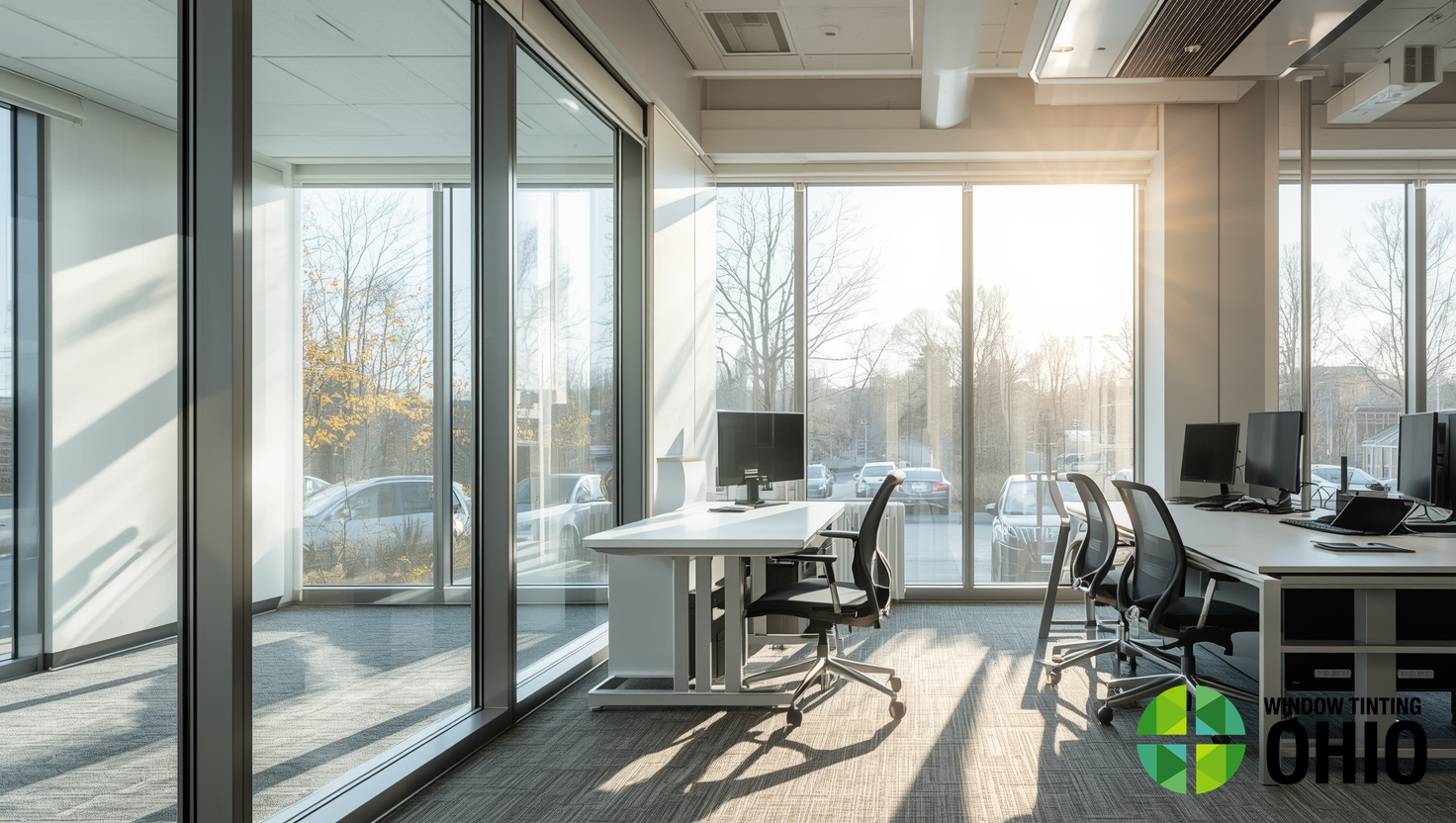
When sunlight is pouring through large commercial windows, it does not take long for glare to affect comfort, productivity, and the way your space looks. We install commercial window film in Ohio to help businesses reduce harsh brightness, keep interiors more consistent during Ohio summers and winters, and maintain a clear, professional view from the inside out.
Whether you manage an office in Columbus, a medical building in Cleveland, or a storefront in Cincinnati, glare control is rarely just a cosmetic issue. It can create monitor washout, trigger hot spots near windows, and force your team to close blinds that block natural light. With the right film, we can dial down glare while keeping the daylight you want.
Why Glare Is A Persistent Problem For Ohio Businesses
Glare is not only about the sun being bright. It is about angle, reflection, and contrast, which is why it can be worse in spring and fall when the sun sits lower in the sky, and still feel intense in the middle of summer.
In many commercial buildings, broad glass areas and open floor plans amplify glare and heat gain. That can affect day-to-day operations in ways we hear about constantly, including:
- Screen glare on computers, point-of-sale displays, and digital signage
- Squinting, eye strain, and discomfort near perimeter offices or conference rooms
- Uneven temperatures that lead to thermostat battles and complaints
- Blinds staying closed all day, reducing daylight and making spaces feel closed-in
If your goal is to keep the view and the daylight while making the workspace usable, window film is often the most efficient place to start. For an overview of our approach, visit Window Tinting Ohio.
How Commercial Window Film In Ohio Reduces Glare Without Killing The View
Glare reduction works by controlling the amount and type of light passing through the glass. The key is choosing a film that targets excessive brightness while preserving visible light in a way that still feels natural indoors.
Depending on your building, glass type, and the rooms affected, we may recommend films that do one or more of the following:
- Reduce visible light transmission to soften harsh brightness
- Cut reflective glare while maintaining strong clarity through the glass
- Reject solar energy to help limit hot spots and midday temperature spikes
- Support comfort in both cooling and heating seasons (important in the Midwest climate)
When we evaluate your space, we focus on the problem areas first: west-facing glass, upper floors with intense afternoon sun, and conference rooms where presentations are most impacted.
UV Protection Matters More Than Most Facilities Teams Realize
Glare is the complaint you feel immediately, but UV exposure is the damage that quietly accumulates over time. Many commercial window films can block up to 99% of harmful UV rays, which helps protect occupants and also helps preserve interiors.
This matters for offices, retail, healthcare, and hospitality spaces where fading and deterioration can be expensive. UV protection helps reduce:
- Fading of flooring, fabrics, and furnishings
- Discoloration of displays and merchandise near windows
- Premature aging of finishes in lobbies and common areas
For context on why UV protection is important, the Skin Cancer Foundation offers helpful guidance on reducing UV exposure in everyday environments.
Comfort And Energy Efficiency: A Practical Bonus For Ohio Properties
When we address glare, we are usually also addressing solar heat gain. That can translate into improved comfort near windows and, in many buildings, less frequent HVAC strain during peak cooling hours.
Every building is different, but reducing solar load can help you:
- Lower the intensity of hot spots that drive occupant complaints
- Keep setpoints steadier across perimeter zones
- Potentially reduce cooling demand during high-sun periods
Energy performance depends on your existing glass, orientation, shading, and HVAC design, but the underlying principle is well established: controlling solar heat gain supports better cooling performance. The U.S. Department of Energy discusses how window attachments and solar control strategies can influence comfort and energy use in buildings (Energy Saver: Window Coverings).
What We Learned From Ohio: The NOPEC Headquarters Example
We always like to point to real-world outcomes, especially when they come from right here in Ohio. A case study at the NOPEC headquarters in Solon, Ohio reported that 3M Prestige Exterior Series window film improved interior comfort, reduced glare, and helped protect office furnishings.
That combination is exactly what many of our commercial clients are after: better day-to-day usability of the space, fewer glare complaints, and longer-lasting interiors, all without the disruption and cost of replacing existing windows.
Where Glare Reduction Delivers The Biggest Business Impact
Most commercial buildings have a handful of zones where glare creates an outsized problem. We typically see the fastest wins when we focus on rooms with high screen use or high customer visibility.
Common high-impact areas include:
- Conference rooms with video calls and presentations
- Open office rows facing east or west
- Reception and lobby areas where first impressions matter
- Retail frontage where glare washes out products and signage
- Patient rooms and treatment spaces where comfort is non-negotiable
If you want to go deeper on how glare control changes the feel of a room, we break it down here: Glare Reduction Benefits.
Choosing The Right Film For Your Building, Not Just The Keyword
Not all films perform the same, and the best option is rarely the darkest one. Our goal is to match performance to your glass and your expectations so the result looks intentional and professional.
When we spec a commercial project, we consider:
- Existing glass type and any coatings already on the window
- Orientation (north, south, east, west) and time-of-day glare patterns
- Desired balance of daylight, view, and glare control
- Appearance requirements for professional exteriors and tenant standards
Commercial Installation That Works With Your Schedule
Downtime is expensive, and we plan commercial installs to keep your business running. We can often phase work by floor, by suite, or by the most impacted elevations first.
We also help set expectations up front so there are no surprises. That includes the look of the film from indoors and outdoors, curing time, and how to care for the glass after installation.
For a broader view of what we provide for businesses statewide, see our Commercial Window Film page.
Ready To Reduce Glare In Your Commercial Space?
If glare is forcing blinds closed, washing out screens, or making certain rooms uncomfortable, we can help you find a commercial window film solution that fits your building and your goals. Contact us to schedule a walkthrough and get a clear plan for glare reduction with commercial window film in Ohio: request a commercial consultation.