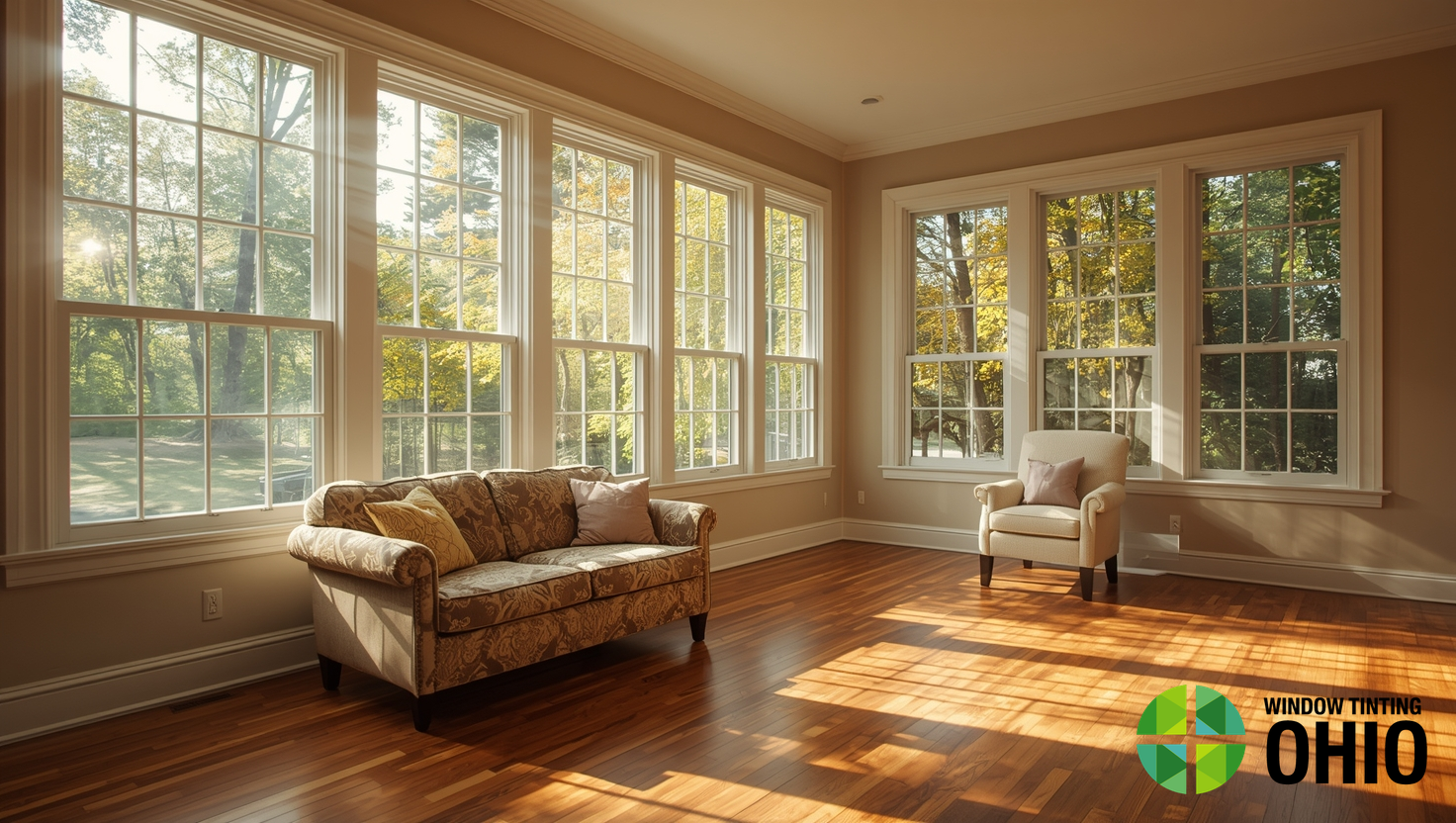
Glare reduction window film in Ohio solves the daily battle with harsh sunlight on screens and shiny surfaces. By filtering excessive brightness and controlling solar heat gain, this film keeps rooms bright without the eye strain that comes from squinting at washed-out displays. Homes and offices across Ohio benefit as days lengthen toward spring: clearer screens, steadier temperatures, and spaces that feel comfortable all day.
How Glare Reduction Window Film Works
Specialized coatings target the brightest portions of visible light while maintaining natural daylight and outdoor views. Quality films balance visible light transmission (VLT) and solar heat rejection so you can keep blinds open without reflections overpowering your TV or monitors. This approach delivers the best of both worlds: glare control that preserves a room’s open, daylight-forward feel.
Everyday Problems It Solves in Ohio Homes
This section explains the key details and how they apply locally before we dig into specifics.
- TV and monitor reflections that force you to close blinds mid‑day
- Hot spots on south- and west-facing rooms as the sun moves
- Eye strain and headaches from excessive brightness and contrast
- Faded furnishings from cumulative sun exposure
Glare reduction window film keeps daylight usable, so living rooms, kitchens, and home offices stay bright but comfortable. The result is a relaxed visual environment where you can read, work, or unwind without constantly adjusting window coverings.
Better Workspaces: Clearer Screens, Fewer Distractions
In offices, glare reduction window film helps employees see detail on spreadsheets, design apps, and collaboration tools—without the squinting and repositioning that interrupt focus. By smoothing out spikes in brightness, the film supports consistent visibility across the workday. Fewer visual distractions translate to better productivity and a calmer environment for meetings and heads-down tasks.
Comfort and Ergonomics Backed by Authoritative Guidance
Workstation comfort is strongly influenced by lighting balance and glare control. The OSHA computer workstation guidance emphasizes arranging lighting to minimize glare on screens and work surfaces, which aligns directly with what glare reduction window film is designed to do. For eye comfort, the American Optometric Association notes that bright reflections and high-contrast glare are key contributors to digital eye strain; reducing glare is a practical, environment-level step that complements healthy habits and display adjustments.
Energy and Uv Benefits You Can Feel
Beyond visual comfort, many glare reduction films also trim solar heat gain to steady room temperatures and reduce cooling load as Ohio warms up. Most architectural films block 99% of UV radiation, which helps slow fading on floors, fabrics, and artwork. That means less squinting now and better protection for interiors over the long term.
Where Glare Reduction Film Performs Best
This section explains the key details and how they apply locally before we dig into specifics.
- South- and west-facing windows that receive strong afternoon sun
- Media rooms and open-concept living spaces with reflective finishes
- Conference rooms and open offices with multiple screens
- Lobbies and storefronts where clear visibility matters
Choosing the Right Film for Your Space
Selection comes down to balancing three factors:
- Glare Control: Enough brightness reduction to calm reflections without making rooms feel dim. Daylight Quality: Films with neutral color tones keep natural light looking crisp and true. Heat Rejection: Higher solar control helps with hot spots and cooling costs as summer approaches.
- Glare Control: Enough brightness reduction to calm reflections without making rooms feel dim. Daylight Quality: Films with neutral color tones keep natural light looking crisp and true. Heat Rejection: Higher solar control helps with hot spots and cooling costs as summer approaches.
- Glare Control: Enough brightness reduction to calm reflections without making rooms feel dim. Daylight Quality: Films with neutral color tones keep natural light looking crisp and true. Heat Rejection: Higher solar control helps with hot spots and cooling costs as summer approaches.
A professional consultation will match film performance (VLT and solar rejection) to your specific windows and room uses, ensuring you get effective glare reduction window film for your Ohio home or workplace.
Installation: Fast Upgrade with Lasting Impact
Most projects complete in hours, with minimal disruption to daily routines. Films install on existing glass, so you keep your windows and gain comfort, clarity, and protection in one step. Maintenance is simple: standard glass-cleaning techniques work fine after the film cures.
Next Steps
Ready to make screens readable and rooms more inviting? Schedule a quick assessment. We’ll review your most glare-prone windows, recommend the right glare reduction window film, and provide clear pricing for your Ohio home or business.