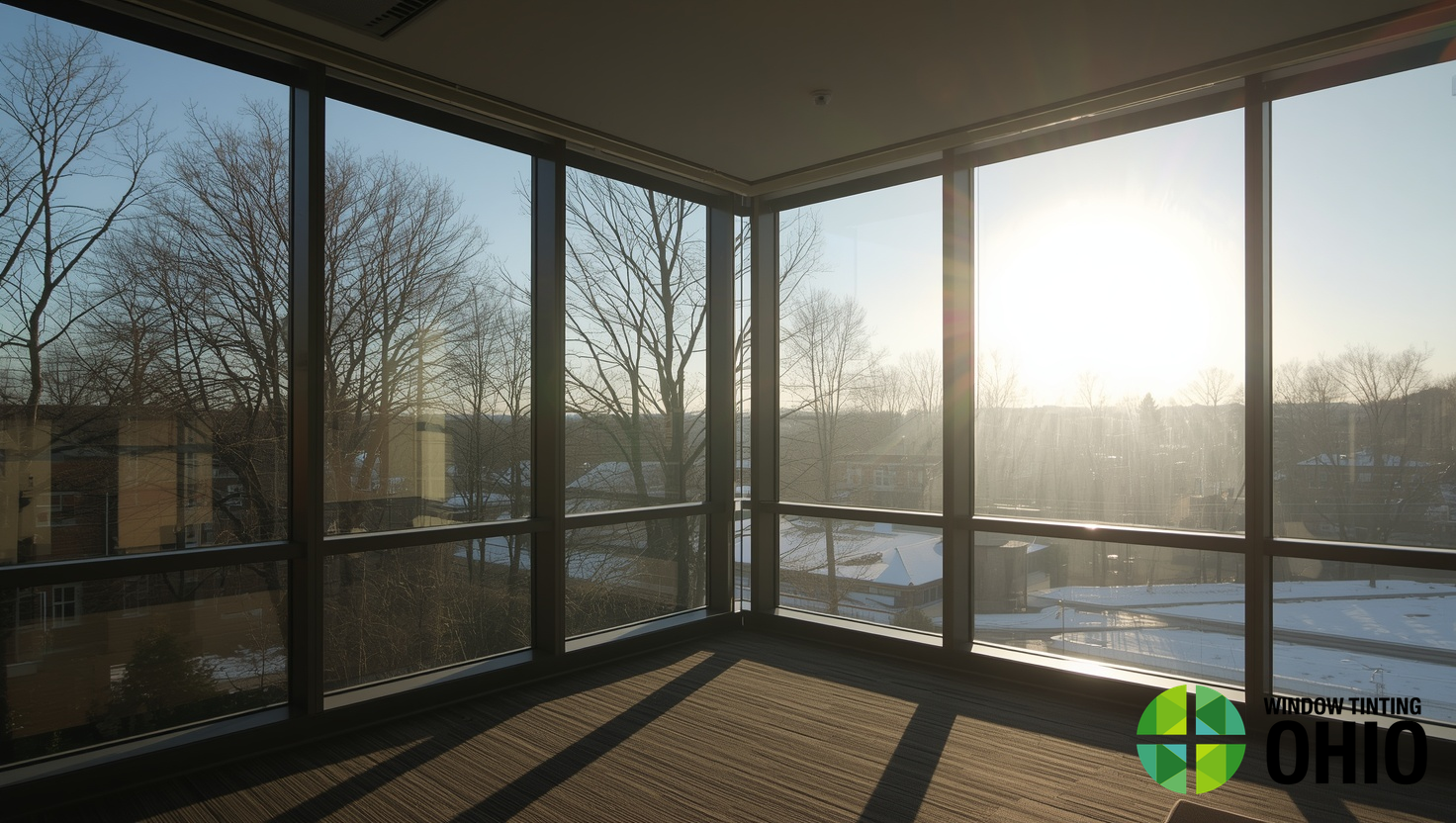
Heat reducing window film in Ohio blocks a large share of solar heat gain so rooms stay cooler, equipment runs less, and comfort improves before summer heat settles in. Homeowners and building managers use these films to tame hot spots near west‑facing glass, stabilize indoor temps, and cut air‑conditioning runtime without replacing windows.
How Heat Reducing Films Work
Modern architectural films use spectrally selective coatings to reflect and absorb portions of the solar spectrum before it becomes heat indoors. By lowering solar heat gain at the glass, interior surfaces warm more slowly and peak temperatures drop, especially in rooms with broad exposures. Many films also reduce visible light to control glare while preserving views and daylight.
Benefits Ohio Property Owners Notice First
This section explains the key details and how they apply locally before we dig into specifics.
- Fewer hot spots near large or west‑facing windows
- Lower peak afternoon temperatures and steadier comfort across rooms
- Reduced AC runtimes and demand spikes during warm spells
- Less screen glare and eye strain in work areas
- Protection from UV that contributes to fading of floors, fabrics, and artwork
Energy Impact and Utility Savings
Cutting solar heat at the glass lowers cooling load, which can translate to measurable energy savings over the season. Efficiency programs emphasize keeping heat out first, then conditioning what remains. ENERGY STAR outlines how improving window performance reduces cooling needs (ENERGY STAR – Windows, Doors, Skylights). For larger facilities, designing to recognized comfort targets, such as those discussed by ASHRAE, helps align projects with occupant comfort and energy goals (ASHRAE Standard 55).
Film Options for Different Spaces
Ohio properties range from older homes with single‑pane glass to modern offices with expansive curtain walls. Good film choices balance heat rejection, daylight, and appearance:
Here are the key points to consider:
- Spectrally Selective Films: High visible light with strong infrared rejection for spaces that need daylight without the heat.
- Neutral Or Low‑Reflective Films: Balanced glare and heat control with a subtle exterior look, common for homes and storefronts.
- High‑Performance Reflective Films: Maximum heat rejection and glare cut for severe exposures and equipment‑dense areas.
Where Results Are Most Noticeable
Expect the quickest comfort gains in rooms with broad afternoon sun, glass near seating areas, and spaces with electronics that add internal heat. Kitchens, living rooms with picture windows, top‑floor offices, and west‑facing conference rooms in Ohio buildings are frequent priorities for heat reducing window film.
Glare Control That Preserves Daylight
Alongside heat reduction, many films cut harsh glare that makes screens hard to read and causes eye strain. Balance matters: enough glare control to work comfortably while keeping useful daylight. See our glare reduction resources for guidance on choosing visible light levels that fit common room uses.
Installation and Maintenance
Professional installation ensures clean edges, proper curing, and warranty coverage. Films are applied to the interior side of glass with a mounting adhesive, then squeegeed to remove solution and air. After curing, maintenance is simple: non‑abrasive cloths and standard glass cleaners keep the surface clear.
When to Upgrade Windows Versus Add Film
Full window replacement improves frames, air sealing, and U‑factor, but it costs more and takes longer. Heat reducing window film is a fast, lower‑disruption upgrade that targets solar heat gain specifically. Many Ohio owners use film now to solve hot spots and defer window replacement to a future capital cycle.
Plan Your Ohio Project
Start with the rooms that feel warmest on sunny afternoons, then select a film that meets your target for heat rejection, visible light, and appearance. Explore our Energy Efficiency category for more on performance tradeoffs and savings potential, and use recognized comfort targets to right‑size glare control. The result is steadier comfort, fewer hot spots, and lower cooling bills as Ohio warms toward summer.