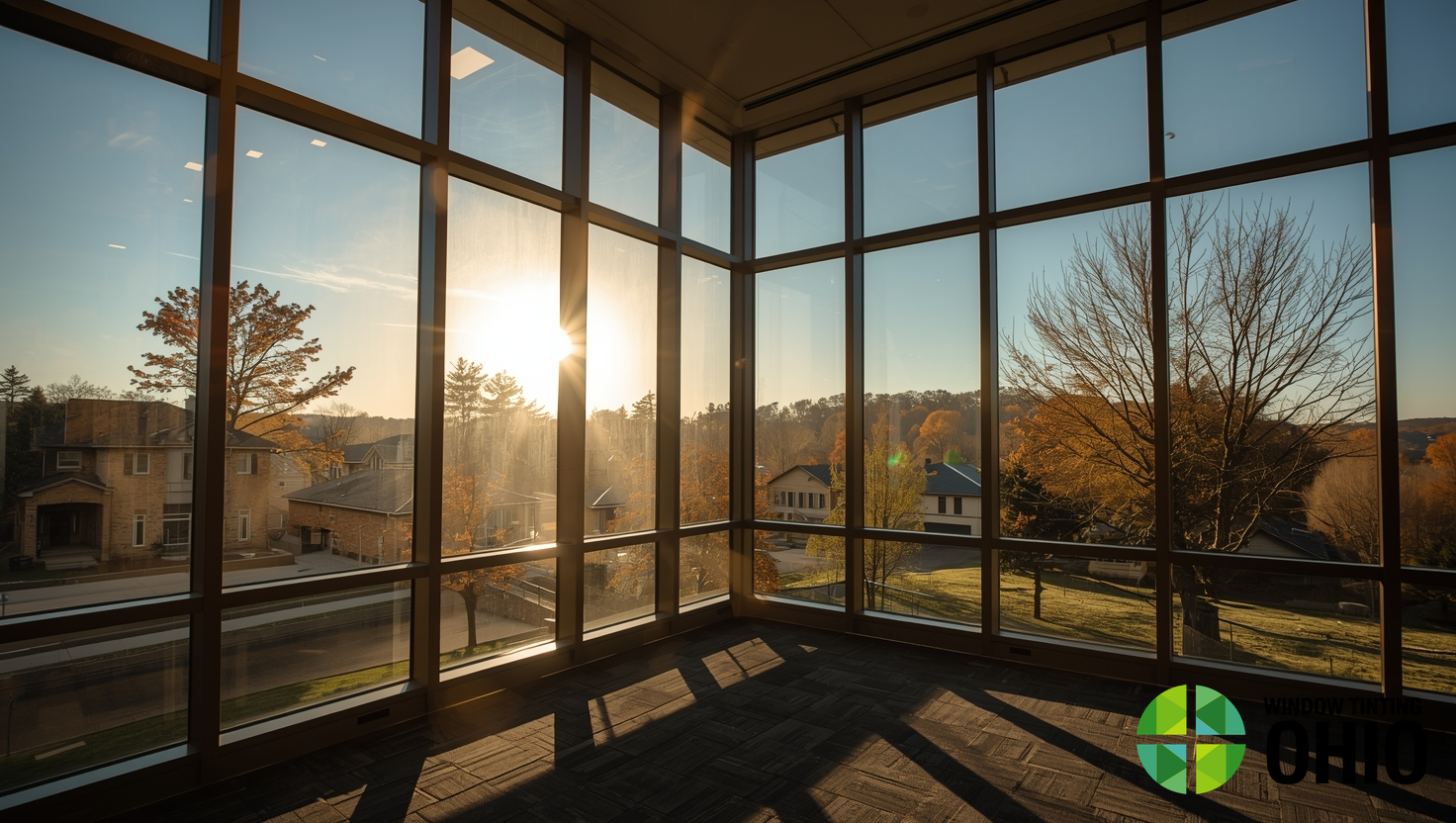
Ohio swings from damp, chilly mornings to sudden warm afternoons, and that back-and-forth shows up as uncomfortable rooms and unpredictable utility bills. Glass is often the weak link: it can admit intense sun in spring and summer and still feel cold in winter. Installing energy efficient window film in Ohio is a practical way to stabilize indoor comfort, reduce HVAC workload, and make bright rooms usable without closing the blinds.
[Embed: https://www.youtube.com/embed/iE0HDd61iLo?feature=oembed]
Why Ohio Buildings Lose Energy Through Glass
Windows are designed for light and views, not for perfectly controlling heat flow. On sunny days, solar heat pours through glass and warms floors, furniture, and interior walls—then that stored heat radiates back into the space for hours. In colder months, the same glass can feel like a heat sink, pulling warmth from nearby air and making rooms feel drafty even when the window is closed.
In many Ohio homes and commercial spaces, the biggest comfort complaints trace back to a few predictable patterns: south- and west-facing windows that create hot spots, large panes that wash out screens with glare, and older glass that has limited solar control. Energy efficient window film in Ohio addresses these issues by changing how the glass handles solar energy—reducing heat gain, balancing daylight, and improving temperature consistency from room to room.
How Energy Efficient Window Film Works
Modern architectural films use thin, durable layers to manage light and heat. Depending on the film type, the coating can reflect a portion of solar radiation, absorb some energy within the film stack, and reduce the amount of infrared heat that passes into the building. The result is a cooler interior under direct sun, without having to sacrifice natural light.
Performance isn’t just about making summer more comfortable. Better solar control often reduces the “thermostat tug-of-war” that happens when one area is overheating while another stays cool. When interior temperatures are more even, HVAC systems cycle more efficiently, and occupants are less likely to overcorrect with aggressive setpoints.
Film selection should match the existing glass and the goals of the space. A storefront might prioritize visibility and glare control, while a residence might focus on afternoon heat on the west side. For a deeper overview of how films are used across different building types, the window film applications in Ohio page is a helpful starting point for aligning film benefits with real-world rooms and use cases.
Key Numbers That Matter: Shgc, U-factor, and Vlt
Choosing film gets easier when you know which ratings correlate to comfort and savings:
Solar Heat Gain Coefficient (SHGC) indicates how much solar heat enters through the window. Lower SHGC generally means less heat gain and improved summer comfort.
U-factor describes heat transfer through the window assembly. Lower U-factor means better insulating performance, which matters most for cold-weather comfort.
Visible Light Transmittance (VLT) tells you how much natural light gets through. Higher VLT keeps rooms bright; lower VLT can help with glare and brightness control.
These terms come up in window performance discussions because they explain why two pieces of glass can feel totally different in the same sun. For a clear explanation of window energy ratings and what they mean, the NFRC guidance on window energy performance ratings offers straightforward definitions that help when comparing options.
Energy efficient window film in Ohio is often selected to reduce SHGC while maintaining a comfortable VLT—enough daylight to keep spaces inviting, without the harsh brightness that drives people to close shades.
Comfort Wins You Feel Immediately
Energy savings matter, but day-to-day comfort is what people notice first. A well-chosen film can:
Reduce hot spots: Rooms with strong afternoon sun feel less like greenhouses, and seating areas near windows become usable again.
Cut glare on screens: Home offices, classrooms, and conference rooms benefit when sunlight is softened without darkening the whole space.
Improve temperature balance: When sun-facing rooms don’t overheat, the thermostat can serve the whole building more fairly.
If glare is one of the main pain points, pairing an energy-focused film with a glare-conscious selection can make a dramatic difference in workspaces and living rooms. The site’s glare reduction window film benefits page explains how glare control translates into more functional, comfortable rooms.
What to Expect for Energy Savings in Ohio
Actual savings depend on the building’s orientation, glass type, shading, HVAC efficiency, and occupant habits. The strongest results typically come from addressing high-exposure windows—especially west-facing glass that gets blasted in late-day summer sun. Commercial buildings with large glass areas often see meaningful reductions in cooling demand because solar heat gain can be a major driver of peak load.

Even when the utility savings vary, the operational benefits tend to be consistent: fewer complaints about specific rooms, less reliance on blackout shades, and more stable indoor conditions during temperature swings. For many properties, those comfort improvements are the deciding factor because they make the space easier to live in, work in, or manage.
For a breakdown of how energy-focused film supports lower HVAC load and more consistent comfort, the energy saving window film in Ohio page maps film benefits to the real drivers behind seasonal utility costs.
Residential Priorities: Bedrooms, Kitchens, and West-facing Rooms
Homes tend to have a few repeat trouble spots: west-facing family rooms that bake during dinner hours, kitchens where sunlight adds heat to cooking heat, and bedrooms that get early-morning glare. In these spaces, energy efficient window film in Ohio can reduce solar gain while keeping the room bright and livable.
Another residential advantage is protecting interiors. Sunlight can fade flooring, artwork, and upholstery over time. Many films also block a large portion of UV, which helps preserve finishes and reduces the “sun-worn” look that shows up in sunny rooms. When homeowners want a single upgrade that improves comfort and protects interiors, starting with the most sun-exposed windows delivers the fastest payoff.
Homeowners comparing options for different rooms can explore residential window film in Ohio to see how film is tailored for comfort, efficiency, and everyday usability in living spaces.
Commercial Priorities: Peak Cooling, Productivity, and Customer Experience
Commercial buildings have different constraints. Retail and offices often want a clean, consistent appearance from the street, along with improved comfort near glass. Hot perimeter zones can force higher HVAC output to keep sunny areas tolerable, which can overcool interior zones and create constant setpoint battles.
In offices, glare can reduce productivity and increase eye strain—especially in open-floor layouts where people can’t easily move desks away from windows. In retail, excessive sun can make certain aisles uncomfortably warm, and customers shorten their visits when the space feels harsh or glaring.
Energy efficient window film in Ohio is often chosen for commercial properties to reduce solar load during peak hours while maintaining a professional look. Building managers who need a solution that supports comfort, appearance, and operations can review commercial window film in Ohio to understand how film aligns with different business environments.
Film Selection: Matching Performance to Your Existing Glass
Not all glass responds the same way to film. Older single-pane or clear double-pane windows often benefit from a wider range of films, while certain modern low-E or coated glass types may require a compatible film to avoid thermal stress concerns. A proper assessment considers window age, pane construction, frame condition, and how sunlight hits the glass across seasons.
The best approach is to define priorities first—heat reduction, glare control, daylight retention, privacy, or a blend—then select a film that delivers those outcomes without compromising the building’s look. In many Ohio properties, a mid-to-high performance film with balanced visible light transmission is the sweet spot: strong solar control without making rooms feel dim.
Installation Quality Makes or Breaks Results
Film performance depends on professional installation. Cleanliness is critical because even tiny debris can create visible imperfections. Proper edge finishing, alignment, and curing time ensure a uniform look and long-term durability. Temperature and humidity also affect how films cure, and experienced installers account for these variables to prevent hazing, bubbles, or edge lift.
Understanding the steps—surface prep, precise cutting, application, squeegeeing, and final inspection—helps set expectations for timelines and post-install care. For a clear walkthrough of what happens on install day, the window film installation process page explains the practical details that influence final appearance and longevity.
Practical Tips for Getting the Most from Film
Start with problem windows: Target the windows causing the biggest comfort issues first—often west- and south-facing glass, or rooms with long sun exposure.
Pair with smart shading: Film reduces heat and glare, and interior shades can be used strategically rather than kept closed all day.
Keep glass clean the right way: After curing, use non-abrasive cleaners and soft cloths to protect the film surface and maintain clarity.
Adjust HVAC setpoints gradually: Once hot spots are reduced, small setpoint changes can improve comfort without overworking equipment.
When Energy Efficient Window Film Is the Right Choice in Ohio
Film is a strong fit when you want measurable comfort and efficiency improvements without replacing windows. It’s especially useful for buildings with good windows that still struggle with solar gain, glare, or uneven temperatures. In many cases, energy efficient window film in Ohio delivers the most value when applied to the highest-exposure glass first, then expanded as comfort goals evolve.
For property owners who want steadier indoor comfort, lower peak cooling strain, and brighter rooms that stay usable all day, window film is a targeted upgrade that can complement almost any building style—from older homes with sunny living rooms to modern offices with large glass façades.