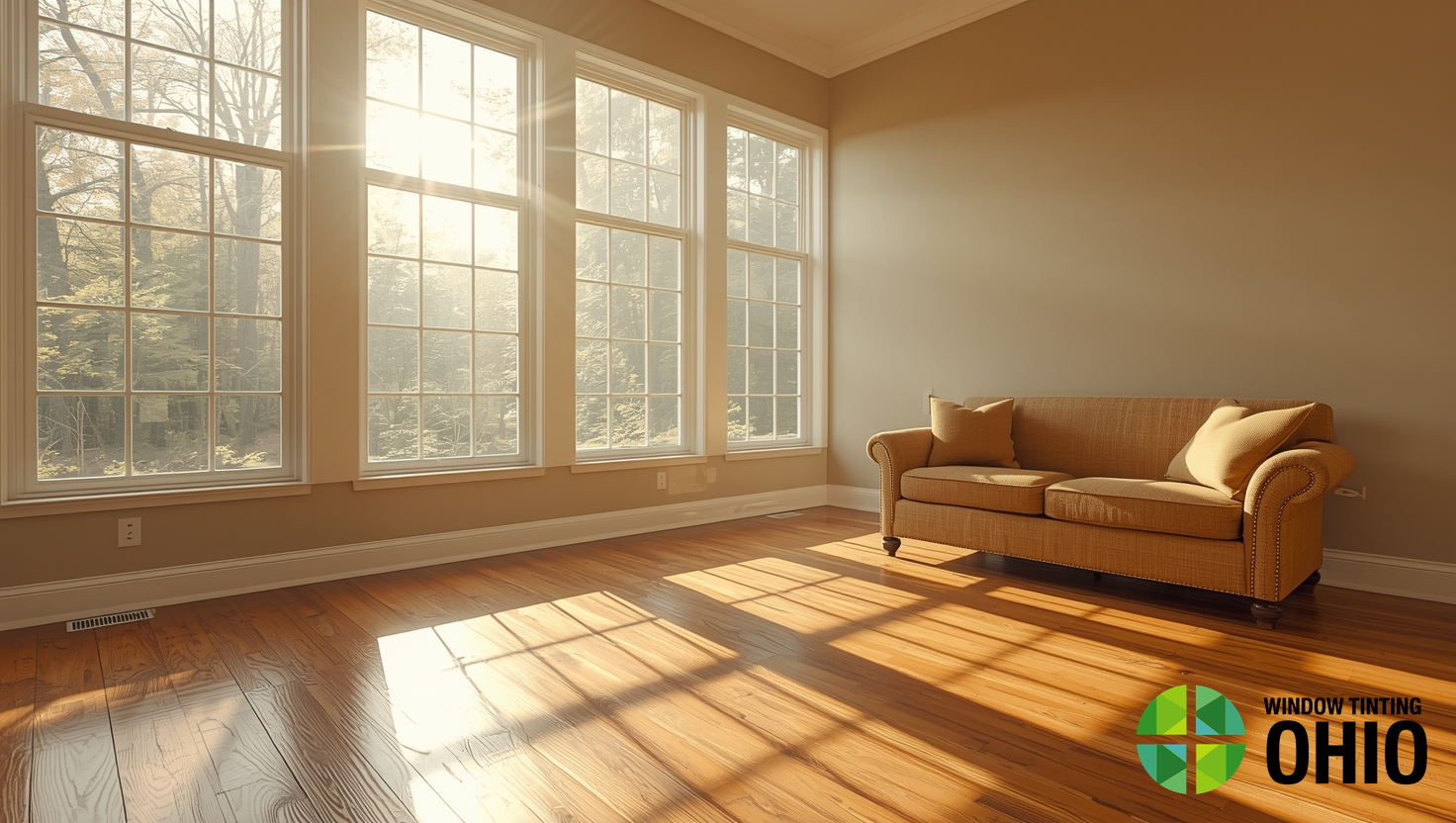
UV protection window film in Ohio solves two persistent problems that sneak up indoors: fading of floors, furniture, and merchandise, and long-term skin exposure from UVA that passes through ordinary glass. While standard window glass blocks most UVB, it lets a significant share of UVA through, which is why fabrics bleach and wood finishes lighten in sunny rooms. Professionally installed films add a nearly invisible UV shield that helps preserve interiors and supports healthier daylight in homes and commercial spaces across the state.
How Uv Protection Films Work
Quality UV protection films use specialized absorbers and stabilizers layered into a thin, optically clear polyester stack that adheres to the interior surface of existing glass. This construction blocks the wavelengths most responsible for fading and photoaging while maintaining natural light. Many films are engineered to block up to 99% of ultraviolet radiation, dramatically cutting the driver of color loss in textiles, artwork, and display materials. Because the technology is applied to your current windows, you gain protection without a disruptive window replacement project.
Why Ohio Homes and Businesses Benefit
Ohio’s mix of bright late-winter sun, long spring days, and reflective summer glare means interiors receive more cumulative UV than most people expect. South- and west-facing windows in particular deliver intense afternoon exposure that fades rugs and upholstery, washes out retail displays, and accelerates wear on wood and vinyl flooring. UV protection window film reduces those risks while keeping spaces bright, which is ideal for family rooms, nurseries, storefronts, museums, and offices that rely on daylight for comfort or merchandising.
Fading Is Not Just about Sunlight Intensity
Fading results from multiple factors: UV radiation, visible light, heat, and material chemistry. UV is the single largest contributor, so addressing it yields the biggest, fastest improvement. By blocking the most damaging wavelengths, films slow the aging of dyes, inks, and finishes, extending replacement cycles and protecting cherished items. Pairing UV film with simple practices—like rotating displays, closing blinds during peak sun, and maintaining stable indoor temperatures—compounds the benefit.
Skin and Eye Considerations Indoors
Because UVA penetrates ordinary glass, people who work or relax near sunny windows still receive dose over time. The EPA’s UV Index overview explains how ultraviolet intensity varies by season and sky conditions, but indoor exposure adds up even on cool days. High-quality window films create a passive layer of protection during daily routines without dimming rooms or altering views, which is especially helpful for nurseries, reading nooks, and desks placed by windows.
Clear, Neutral, or Tinted: Picking the Right Look
Modern UV protection films come in clear, neutral, and lightly tinted options. Clear films prioritize maximum daylight and an invisible finish—ideal for galleries, boutique retail, and homes that want protection without changing the glass. Neutral films add a subtle tone that softens glare and reflections. Light tints offer a touch of additional heat and brightness control for rooms that run warm on sunny afternoons. Your installer can show samples on-site so you can compare clarity, reflectance, and color against your furnishings.
Where to Install for the Biggest Impact
Target rooms with valuable finishes or frequent occupancy near windows: living areas with hardwood floors, sunrooms, home offices, children’s bedrooms, storefront display windows, and reception areas. In commercial settings, prioritize south- and west-facing glass, high-traffic corridors with artwork or signage, and customer seating areas. For broader comfort and utility savings, consider pairing UV films with selective heat-control films on the sunniest facades and review our Energy Efficiency resources.
Compatibility with Double-pane and Low‑e Glass
Most UV protection films are designed for use on modern double-pane windows and many low‑E coatings. Professional installers evaluate glass type, exposure, and shading to select a film with the correct solar absorption and reflectance profile. This safeguards warranty compliance and ensures long-term optical stability—no haze, distortion, or color shift in normal use.
Maintenance and Longevity
After curing, films clean like glass—use soft cloths and non‑abrasive cleaners. Leading products carry manufacturer warranties and maintain performance for many years when installed on sound glazing. Because UV absorbers are built into the film, protection remains consistent over the service life.
Trusted References on Uv and Protection
For an at‑a‑glance refresher on daily UV conditions, bookmark the EPA UV Index. For an industry overview of how films block ultraviolet radiation and help prevent fading, see the International Window Film Association’s UV protection guide. Both resources help set expectations and reinforce why adding a UV barrier to existing windows is a smart, low‑disruption improvement.
Next Steps in Ohio
If you’re ready to keep natural light while defending interiors, start with the rooms that get the most afternoon sun and contain vulnerable surfaces—rugs, leather, art, and finished wood. Combine UV protection film with simple shade control to maximize results, and explore additional ideas in our UV & Fade Protection articles. A short on‑site assessment can confirm glass type, appearance preferences, and expected performance so you can protect what you love without darkening your view.