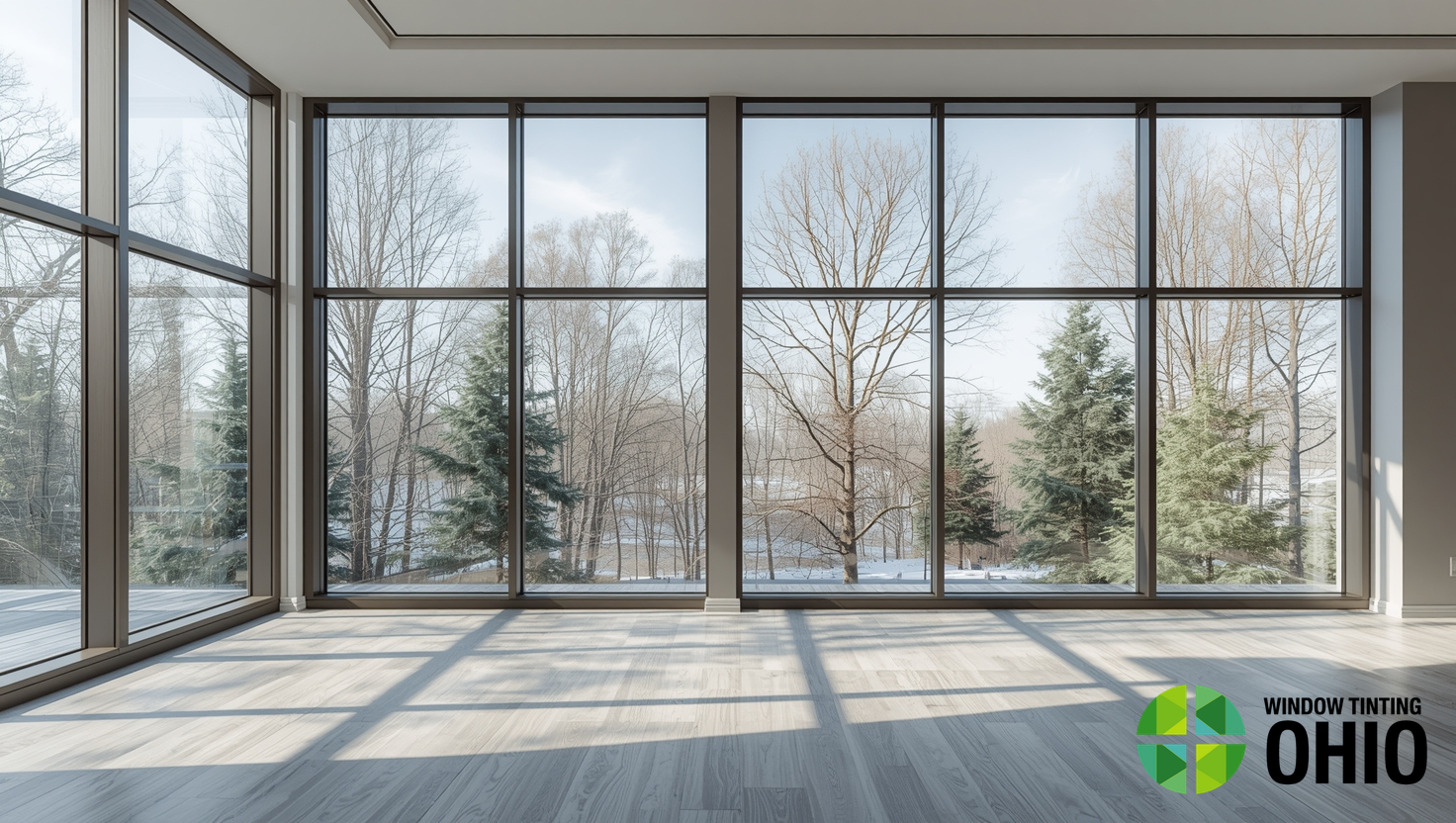
Ohio winters can feel dim—until the sun sits low in the sky and pours through your windows for hours. That low-angle light can create glare, hot spots, and a surprising amount of long-term damage to floors, furniture, and office interiors. Installing UV window film in Ohio is a practical way to cut UV exposure year-round and slow the fading that shows up as washed-out fabrics, dull wood, and uneven flooring.
Why Winter Sun Can Be Hard on Interiors
In the colder months, the sun’s path is lower, which often means direct rays reach deeper into living rooms, conference rooms, and storefront areas—especially on south- and west-facing glass. Even when outdoor temperatures are low, sunlight can still carry energy that affects interior finishes.
Common winter-sun complaints we hear around Columbus, Cleveland, Cincinnati, and the surrounding suburbs include:
- Glare on TVs, monitors, and whiteboards
- Uneven fading on hardwood, vinyl plank, and area rugs near windows
- Sun “bands” across upholstery and office seating
- Discomfort from bright, direct light during morning or late-afternoon hours
Because winter sun often lands in the same spots day after day, the damage tends to be concentrated—and more noticeable.
Uv Rays: the Invisible Driver Behind Fading
Fading is usually caused by a mix of light and heat, but UV radiation plays an outsized role. Many people assume standard window glass blocks all UV. It doesn’t. UVA rays can pass through window glass, according to the American Academy of Dermatology’s UV exposure guidance. That matters because UVA is present all year, not just in summer.
That year-round exposure is why UV window film in Ohio is valuable even when it’s cold outside: your interior materials—and the people near the glass—can still be exposed to UVA during winter commutes at home, sunny weekend mornings, or long workdays by the window.
How Uv Window Film Helps Reduce Fading
Quality window film is designed to filter damaging wavelengths before they reach your interior surfaces. According to the Skin Cancer Foundation’s window film overview, window film can block up to 99% of UV radiation. For homeowners and facility managers, that translates into slower fade progression and more consistent-looking finishes.
What this can protect over time:
- Hardwood and laminate flooring (reduces uneven color changes near windows)
- Furniture and upholstery (slows fabric fading and drying)
- Window treatments like curtains, blinds, and shades
- Artwork and framed photos (helps preserve pigments and paper)
- Office interiors including carpet tiles, seating, and branded displays
While no solution can eliminate fading entirely (visible light and heat also play a part), UV filtration is one of the biggest “levers” you can pull to meaningfully reduce it.
Home Vs. Office Needs: Picking the Right Approach
The right film choice depends on your goals: UV protection alone, UV + glare control, or a broader comfort upgrade. In homes, the most common requests are reducing sun damage on flooring and furnishings while keeping rooms bright. For businesses, glare reduction and a more comfortable workspace often lead the list—along with protecting customer-facing interiors.
If you’re researching options, these pages can help you compare applications and outcomes:
- Learn how films are selected and installed for residential window tinting to protect living spaces and furnishings.
- See how glare control and UV protection support productivity with commercial window film for offices and facilities.
In many Ohio buildings, a room-by-room plan works best—stronger glare control where the sun is most direct, and lighter films where you want maximum daylight with robust UV filtering.
Signs Your Space Could Benefit Right Now
Not sure whether UV window film in Ohio is worth it for your property? These are strong indicators you’ll see real benefits:
- You notice faded strips on flooring near glass doors or picture windows
- Your sofa or office seating is lighter on the window side
- Employees or family members shift seats to avoid glare at certain times
- You rotate rugs, artwork, or displays to hide uneven fading
- You have large west-facing windows that get intense afternoon sun (even in winter)
Addressing UV and glare sooner can help preserve what you already have, rather than replacing items after the damage is obvious.
Year-round Value in Ohio’s Changing Seasons
Ohio weather swings from cold winters to humid summers, but UV exposure is steady across seasons—and interior fading adds up gradually. That’s why UV window film in Ohio isn’t just a “summer comfort” upgrade. It’s a long-term protection strategy that helps keep spaces looking newer, reduces harsh sunlight, and supports a more consistent interior environment all year.
If you’d like help choosing the right film for your windows and your goals, schedule a quick consultation through our Contact Us page—we’ll recommend options that prioritize UV protection and fade reduction without sacrificing the look of your home or office.