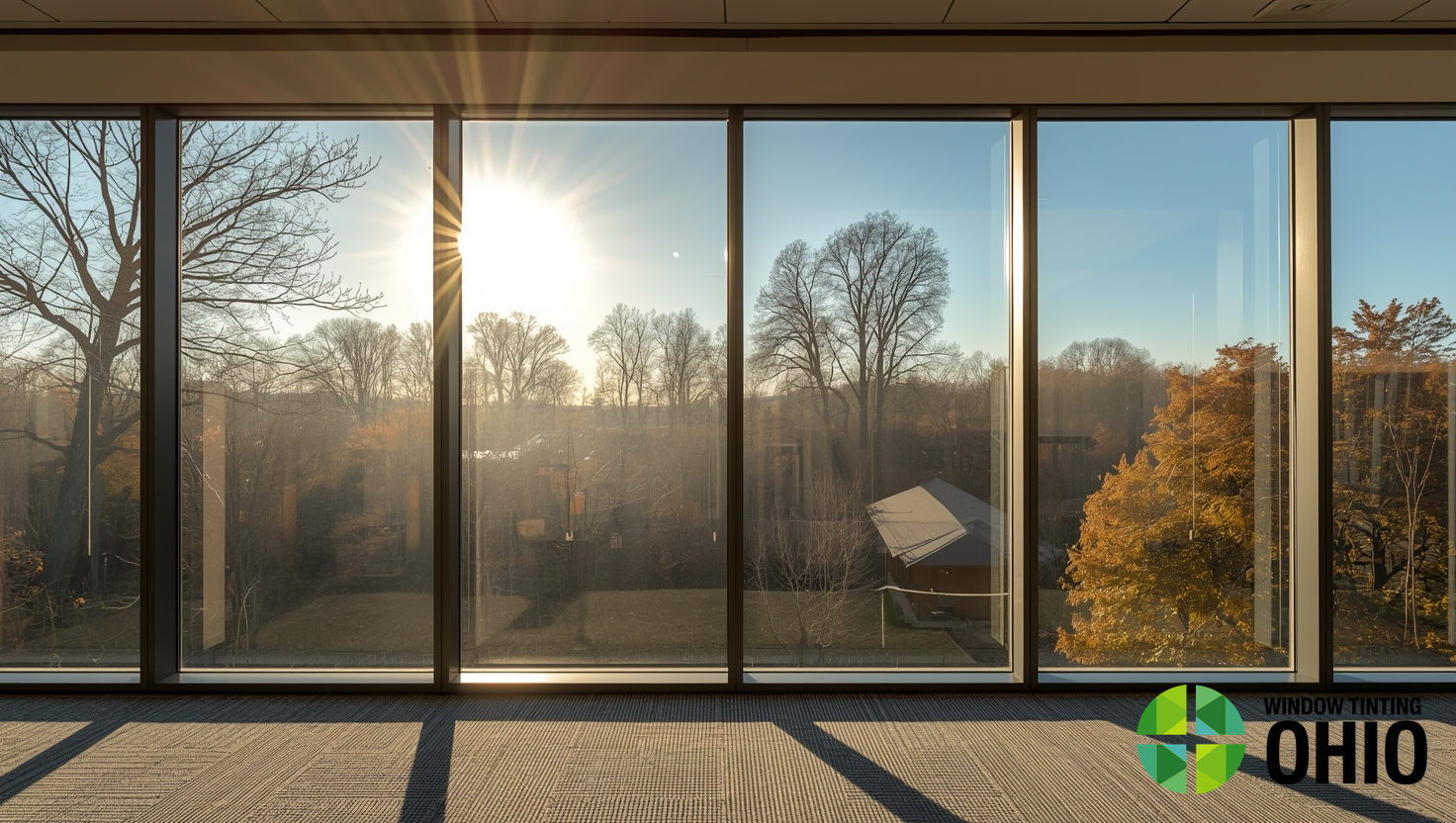
When an Akron afternoon turns muggy and bright, it doesn’t take long for certain rooms to feel like they’re fighting the thermostat. West-facing living rooms in Wallhaven, a home office near Highland Square, or a bonus room with big glass can spike in comfort before the rest of the house ever feels warm. If you’ve ever stood near a sunny window and felt that “radiant blast,” you already know the real question isn’t only about air temperature—it’s about what’s coming through the glass.
[Embed: https://www.youtube.com/embed/GtzJXehX_mI?feature=oembed]
So, does window tint help with heat in Ohio? In many Northeast Ohio homes and small businesses, the answer is yes—when the film is chosen for solar control and installed correctly. The bigger win is usually fewer hot spots, less glare, and a more even feel in the rooms that used to be toughest to cool.
Akron’s Summer Heat: Why the Ac Still Can’t Keep up
Ohio summers aren’t just “hot”—they’re a mix of humidity, long daylight hours, and sun angles that punish the same windows day after day. In Akron, it’s common to see the worst heat in late afternoon when the sun hits west-facing glass. If you live near the Merriman Valley or you’re tucked just off I-77, your microclimate can feel different than a friend across town, but the physics is the same: sunlight carries energy, and standard glass doesn’t stop enough of it.
Air conditioning removes heat from indoor air. Sunlight adds heat by warming interior surfaces—floors, furniture, countertops—and those surfaces then radiate warmth back into the room. That’s why a space can feel “hotter than the thermostat.” That’s also why so many homeowners ask, does window tint help with heat in Ohio when the sun hits the same windows for hours at a time.
Does Window Tint Help with Heat in Ohio?
Does window tint help with heat in Ohio? Yes, the right window film can meaningfully reduce solar heat gain through your glass, which helps your AC keep up and makes the sunniest rooms feel more livable. The effect is most noticeable in the spaces that used to overheat first—south- and west-facing rooms, glass-heavy areas, and any spot where glare pushes you to close blinds (and then rely on lights).
Window film isn’t a magic replacement for AC or insulation, and it won’t fix air leaks, undersized equipment, or attic issues. But when heat is coming through the windows, film is one of the few upgrades that targets that problem directly without changing the look of the home the way heavy exterior shading can.
What Solar Control Film Actually Blocks
Solar heat gain is a blend of visible light (what you see) and infrared (what you feel). High-performance solar control films are designed to reduce the heat-driving parts of sunlight while keeping your view and natural light more intact than old-school dark tint.
For example, 3M notes that its Prestige Series window films can reject up to 97% of infrared light and reject up to 60% of the heat coming through your windows (performance varies by specific film and glass type). Those kinds of numbers explain why the “standing near the window” experience changes so much after installation. You can read more on the 3M Sun Control Window Film Prestige Series product information.
If you’re evaluating whether window film is worth it, does window tint help with heat in Ohio specifically through infrared control? That’s the point: reduce the radiant load coming through glass so the room feels calmer, not blasted.
Another practical bonus: many quality films also block a huge portion of UV, which helps slow fading on floors, furniture, and fabrics—important in sunny rooms that face the Towpath Trail side of the house or get blasted during golden hour.
Rooms in Akron That Benefit Most from Heat-reducing Film
If you’re trying to decide where window tint will make the biggest comfort difference, start with the glass that gets the strongest and longest sun exposure. In Akron-area homes, these are the most common “problem windows” we hear about.
- West-facing living rooms and family rooms that heat up after 3 p.m. and stay uncomfortable into the evening.
- South-facing kitchens where sunlight turns counters and flooring into a slow-release heater.
- Home offices where glare and screen reflections force blinds closed, especially if you work from home and need consistent comfort.
- Sliding glass doors and large picture windows that act like a radiator on bright days.
- Sunrooms and four-seasons rooms that were built to catch light but can be tough to cool in July.
Does window tint help with heat in Ohio if you only tint one or two windows? It can—particularly if those windows are the main source of afternoon heat. Many Akron homeowners start with the hottest room and expand once they feel the difference.
How Much Cooler Will It Feel?
Most people notice window film as a comfort upgrade first, not a “thermostat drops 10 degrees” moment. The best day-to-day change is that the room feels less aggressive: fewer hot spots near the glass, less radiant heat on your skin, and a more even temperature across the space. If your AC used to run nonstop to keep up, film can reduce the load so the system cycles more normally—especially in older homes in neighborhoods like Firestone Park or Ellet where window sizes and orientations weren’t designed around modern cooling expectations.
Energy savings depend on the building, your glass, shading, and how you use the space. That’s why it’s smart to treat film as part of a comfort plan: handle the biggest sun exposures, keep vents unblocked, and use shades strategically for the most punishing hours.
Film Specs That Matter in Northeast Ohio
Not all window tint is designed for heat control, and the spec sheet language can be confusing. When someone asks, does window tint help with heat in Ohio, these ratings are the best way to compare options without relying on vague claims.

Heat rejection highlights for does window tint help with heat in Ohio.
If the priority is lower indoor heat in summer, these are the performance ideas worth paying attention to before choosing a film.
- Solar Heat Gain Coefficient (SHGC): This is a 0–1 rating; lower generally means better heat-blocking. SHGC is a core number on NFRC-rated labels for window films.
- Visible Transmittance (VT): Higher VT means more natural daylight comes through. If you want a bright look with heat control, VT matters.
- Infrared (IR) rejection / heat rejection claims: This is where many high-performance films shine, reducing that “radiant” feeling near the window.
- Reflectivity: Reflective films can block heat well, but may change the exterior look. Neutral, low-reflective options are popular for many Akron neighborhoods.
- Glass compatibility and warranty: Dual-pane and low-e glass can require the right film choice to avoid stress issues. A professional assessment prevents expensive mistakes.
The U.S. Department of Energy explains how films reduce solar heat gain and notes that window films are rated by the National Fenestration Rating Council (NFRC), including SHGC and visible transmittance. The DOE’s overview is a solid reference if you want to understand the basics: Department of Energy guidance on window films and energy performance ratings.
Choosing the Right Film for Ohio Summers
For many customers, the decision starts with one question: does window tint help with heat in Ohio enough to justify the upgrade? The honest answer depends on your exposure, your glass, and your comfort goals.
Does window tint help with heat in Ohio the same way for every home? Not really. A Cape Cod near Montrose, a ranch in Fairlawn, and a newer build in Bath Township can have different glass types and sun exposure. The best results come from matching film selection to your specific windows and goals.
Before you commit, it helps to decide what you care about most—comfort, glare control, maintaining a clear look, or balancing all three. Here are common selection priorities that come up in consultations.
- Maximum comfort on a specific side of the house: Target the west and south exposures first for the biggest heat reduction.
- Clear or neutral appearance: Spectrally selective films can reduce heat while keeping the glass looking more natural.
- Glare reduction for screens: Helpful for remote work setups and living rooms where TV glare is constant.
- Protecting interiors: UV reduction helps slow fading of flooring, rugs, and furniture in sun-heavy rooms.
For a deeper look at comfort and cost benefits, the best starting point is our guide to energy saving window film options in Ohio. If you’re comparing solutions across your whole home, you can also explore residential window film services for Ohio homeowners.
Residential and Commercial Results: What Changes (and What Doesn’t)
Homes and businesses across Ohio often share the same pain point: direct sun through glass creates uncomfortable zones. In a residence, it might be the upstairs bedroom that faces the afternoon sun. In a commercial space—whether it’s an office off Market Street in Akron, a storefront outside Cleveland, or a workspace in Columbus—the problem is often glare and uneven comfort that affects productivity and customer experience.
The same question comes up in every city: does window tint help with heat in Ohio offices as well as homes? Yes, especially on glass-heavy facades and west exposures where late-day sun is brutal. Many businesses choose films that prioritize comfort and glare control while keeping a professional, low-reflection appearance. If you’re considering solutions for a workplace, take a look at commercial window film services in Ohio.
Common Mistakes That Keep Rooms Hot after Tinting
When someone says, “Window film didn’t help,” it’s usually one of a few fixable issues: the film wasn’t selected for solar control, the wrong windows were addressed, or the building has another major heat source. If you’ve been asking does window tint help with heat in Ohio and you want the answer to be a confident “yes,” avoiding these mistakes makes the results far more predictable.
- Choosing a film for looks instead of performance: Not every tint is a heat-control product. Solar control films are built for comfort.
- Skipping the worst exposure: If the west side is the real problem, tinting only the north side won’t move the needle.
- Leaving interior shades wide open on peak-sun windows: Film helps, but combining it with smart shade use can improve comfort even more.
- Ignoring glass type: Dual-pane and low-e glass need compatible film choices to avoid potential stress and warranty issues.
- Expecting film to fix insulation or HVAC problems: If attic heat or air leaks are the main culprit, film is only one part of the solution.
A Quick Akron Heat-check before You Pick Film
If you want a simple way to pinpoint which windows are driving the most discomfort, take a few minutes on the next sunny day and check patterns, not guesses. This quick routine helps you get a more accurate recommendation.
- Note the time of day the room becomes uncomfortable (morning east sun vs. late-day west sun). Stand one foot from the glass and notice the radiant heat on your skin compared to the center of the room. Identify the glass type if you can (single vs. double pane, low-e coatings, etc.). List the non-negotiables like keeping a bright look, reducing glare for a TV, or improving comfort for a nursery. Prioritize the top 2–4 windows first so you can get the biggest comfort return quickly.
- Note the time of day the room becomes uncomfortable (morning east sun vs. late-day west sun). Stand one foot from the glass and notice the radiant heat on your skin compared to the center of the room. Identify the glass type if you can (single vs. double pane, low-e coatings, etc.). List the non-negotiables like keeping a bright look, reducing glare for a TV, or improving comfort for a nursery. Prioritize the top 2–4 windows first so you can get the biggest comfort return quickly.
- Note the time of day the room becomes uncomfortable (morning east sun vs. late-day west sun). Stand one foot from the glass and notice the radiant heat on your skin compared to the center of the room. Identify the glass type if you can (single vs. double pane, low-e coatings, etc.). List the non-negotiables like keeping a bright look, reducing glare for a TV, or improving comfort for a nursery. Prioritize the top 2–4 windows first so you can get the biggest comfort return quickly.
- Note the time of day the room becomes uncomfortable (morning east sun vs. late-day west sun). Stand one foot from the glass and notice the radiant heat on your skin compared to the center of the room. Identify the glass type if you can (single vs. double pane, low-e coatings, etc.). List the non-negotiables like keeping a bright look, reducing glare for a TV, or improving comfort for a nursery. Prioritize the top 2–4 windows first so you can get the biggest comfort return quickly.
- Note the time of day the room becomes uncomfortable (morning east sun vs. late-day west sun). Stand one foot from the glass and notice the radiant heat on your skin compared to the center of the room. Identify the glass type if you can (single vs. double pane, low-e coatings, etc.). List the non-negotiables like keeping a bright look, reducing glare for a TV, or improving comfort for a nursery. Prioritize the top 2–4 windows first so you can get the biggest comfort return quickly.
Does window tint help with heat in Ohio when the issue is only a couple of windows? Often, yes—because the hottest windows can dominate how a room feels.
Get a Quote for Heat-reducing Window Tint in Ohio
If you’re in Akron or anywhere in Ohio and you’re tired of battling hot spots every summer, a solar control window film consultation can turn guesswork into a plan. If you’re still wondering, does window tint help with heat in Ohio for your exact windows, we can evaluate your exposures, confirm your glass type, and recommend a film built for measurable heat control.
Reach out for a free quote and an on-site assessment—whether you’re near downtown Akron, over by Chapel Hill, or you’re coordinating a project in Cleveland, Columbus, Cincinnati, or Dayton. If you’d like to do a little homework first, our window film fact sheet is a helpful overview. When you’re ready, contact us and we’ll show you exactly how much difference the right film can make for comfort and cooling costs.